Bilbao’s transformation from an industrial port city into one of Europe’s most recognisable cultural destinations is entering a more complicated phase. The Guggenheim Museum still draws visitors toward the Nervión River, its titanium curves catching the changing northern light, but the city’s current debate reaches well beyond architecture. Residents, business owners and officials are asking how Bilbao can preserve the character that made its recovery credible while managing rising rents。crowded streets and a tourism economy that is no longer a side effect of regeneration. On a wet weekday morning, the museum district can feel remarkably calm. By afternoon, tour groups gather around Jeff Koons’ flower-covered Puppy, while local commuters move quickly through the same public spaces. That contrast captures Bilbao’s success—and the tension now embedded in it.The city’s revival began long before the Guggenheim opened in 1997。though the museum became its most powerful international symbol. Bilbao invested in river cleanup, new transport links, public spaces and ambitious architecture at a moment when its steel and shipbuilding industries were shrinking. The result was not a simple tourist makeover. Metro stations designed by Norman Foster, the white curves of the Zubizuri bridge and the riverside promenade helped reconnect neighbourhoods that had once faced an industrial waterfront. Bilbao’s central districts remain practical rather than theatrical: bakeries open early, pintxos bars fill with office workers, and residents still use the tram to cross the city. That everyday rhythm is a major part of Bilbao’s appeal. Visitors are not entering a museum set;
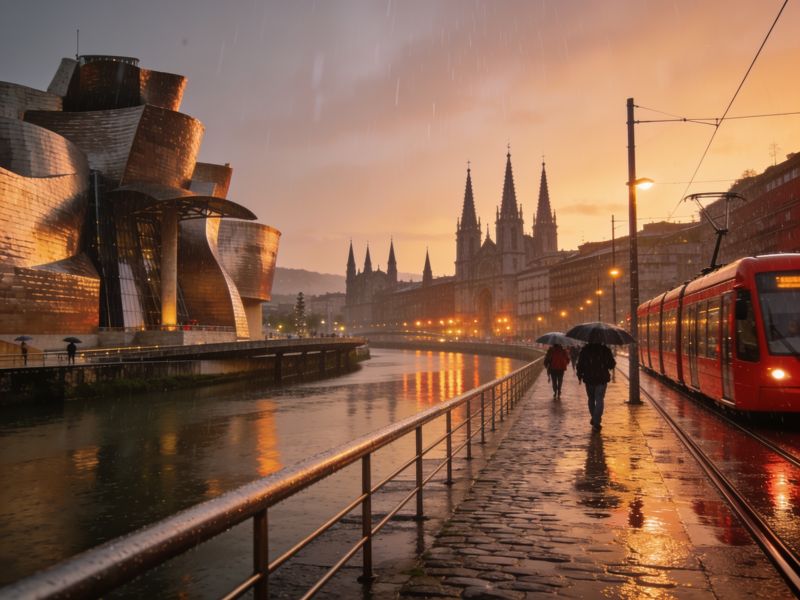
they are stepping into a working urban community with strong local habits and a distinct Basque identity.Tourism has brought clear gains. Hotels, restaurants, cultural venues and small design businesses have created employment, while international recognition has strengthened Bilbao’s position as a conference and weekend destination. The city also benefits from its location between the Atlantic coast and the mountains, with easy access to towns such as Getxo, Gernika and San Sebastián. Yet the benefits are uneven. Owners of traditional bars complain that commercial leases are becoming harder to afford, and some central apartments have shifted toward short-term rentals. Bilbao has not reached the scale of pressure seen in Barcelona or Lisbon, but the warning signs are visible in renovated façades, higher prices and neighbourhoods where visitors outnumber long-term tenants during peak periods. A local shopkeeper near the Casco Viejo put the issue plainly: business is better, she said。but the city must remain a place where people can still live, not merely somewhere they can spend a weekend.Bilbao’s cultural identity also shapes its politics. Athletic Club remains a powerful civic institution, and match days turn streets around San Mamés into a sea of red and white. The club’s policy of fielding players with a connection to the Basque Country is often discussed abroad as a sporting curiosity, but inside Bilbao it reflects a deeper attachment to local belonging. That sense of place appears in food, language and public life. Euskara can be heard alongside Spanish on buses and in schools, while markets such as La Ribera continue to serve residents as well as curious visitors. For Bilbao, the challenge is not choosing between tradition and openness. It is making sure that global attention does not flatten the city into a set of marketable images: the Guggenheim, pintxos。football and rainy streets. The strongest experiences usually come from details that cannot be packaged so easily, such as a late lunch stretching across several small plates or the sudden quiet of a riverside path after the evening rush.City planners are now focusing on housing, sustainable mobility and the next generation of public projects. Bilbao’s tram extensions and pedestrian improvements have made many central routes easier to navigate, while former industrial sites continue to be reconsidered for offices, homes and cultural use. The risk is that regeneration becomes an endless demand for novelty, forcing Bilbao to compete through larger buildings and bigger visitor numbers. A more durable strategy would protect affordable housing, support independent businesses and spread tourism beyond the best-known riverfront landmarks. Bilbao does not need to prove that it can reinvent itself;that argument was settled decades ago. Its more difficult task is quieter and more important: deciding who the city is being renewed for. If Bilbao can keep its streets useful to residents while welcoming outsiders with confidence。its next chapter may be less spectacular than the Guggenheim effect, but far more resilient.