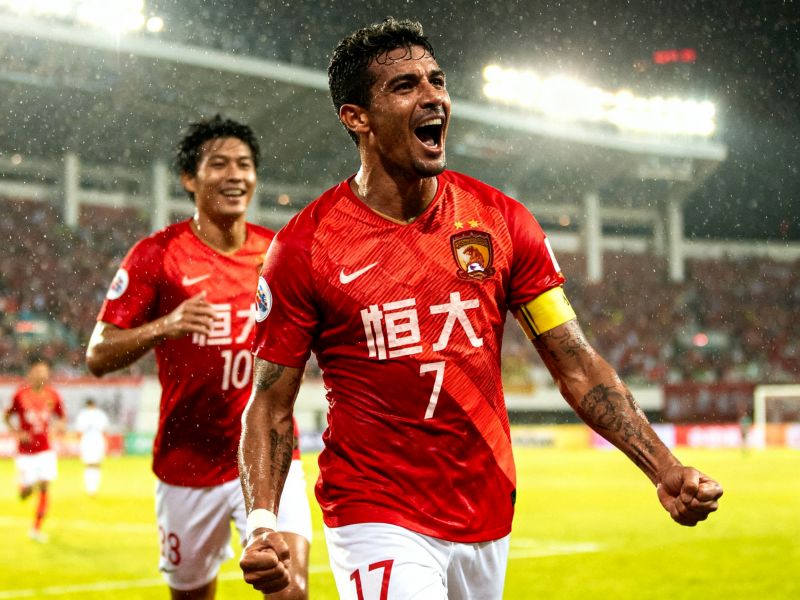
aulinho arrived at Guangzhou Evergrande in June 2015 for €14 million from Tottenham Hotspur. The Brazilian midfielder was not the first foreign player at the club, but his transfer signaled a shift. Evergrande had already won four consecutive Chinese Super League titles。yet the club's foreign signings before Paulinho—Dario Conca, Muriqui, Elkeson—were talented but rarely household names in Europe. Paulinho changed that. He brought Premier League and Champions League experience to a league still finding its global footing.The list of Evergrande's foreign players reads like a scouting report from three different continents. Ricardo Goulart, signed in 2015 for €15 million, scored 73 goals in 104 appearances. Anderson Talisca arrived on loan in 2018 and immediately became the league's most feared attacker. Then came the returnees: Paulinho left for Barcelona in 2017, only to rejoin Evergrande a year later. That kind of back-and-forth was unusual for a Chinese club。and it showed how aggressively Evergrande pursued proven talent. Few supporters in Guangzhou questioned the fees. The results justified them: eight CSL titles, two AFC Champions League crowns.Not every foreign player worked out. Jackson Martínez。
a €42 million signing from Atlético Madrid in 2016, managed only four goals before injuries derailed his career. His transfer remains a cautionary tale about paying for past reputation rather than current form. A club official once admitted, off the record, that Martinez's medical was rushed. That admission never made headlines, but it explained the silence around his departure. Meanwhile, players like Kim Young-gwon, a South Korean defender, quietly held the backline together for years. He never got the fanfare of a Brazilian striker, yet his consistency mattered just as much.What stands out about Evergrande's foreign players is how they mirrored the club's broader strategy. Sign a proven goal scorer。win immediately。then sign another. There was little patience for development. When the Chinese Football Association introduced salary caps and transfer restrictions in 2019, the strategy crumbled. Paulinho left again, this time for good. Talisca followed. The club's financial collapse in 2021 turned those expensive contracts into liabilities. Former players pursued unpaid wages through FIFA, and some won. The foreign pipeline that once defined Evergrande's dominance simply stopped.Looking back。
the contributions of Evergrande's foreign players extend beyond trophies. They raised the league's visibility during a crucial decade. Young Chinese players trained alongside them, learning habits that no domestic coach could teach. That legacy is complicated by the club's financial ruin, but it is real. A scout I spoke with last year put it plainly: "Evergrande showed what was possible, then showed what happens when you build on sand." The foreign players were never the problem. They were the proof.