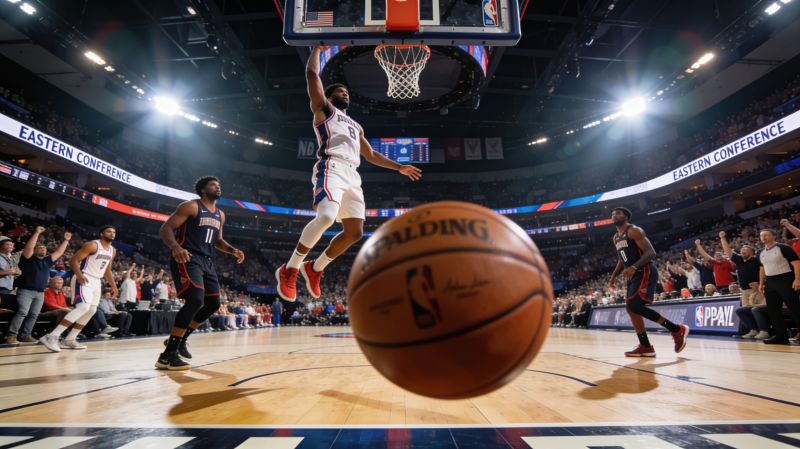
he latest NBA rankings have Boston at or near the summit, and the case is not complicated. The Celtics win the minutes that decide games—early fourth quarters, after timeouts。against switched defenses—because their top six players can all shoot, guard, and make the next pass. Jayson Tatum's shot profile has quietly become more efficient;Jaylen Brown attacks closeouts instead of settling;Derrick White and Jrue Holiday cover the small mistakes that usually become corner threes. Kristaps Porzingis gives them a release valve when the offense bogs down, and Al Horford remains the adult in the room on defense. Payton Pritchard's shot-making has turned bench minutes into a relative strength rather than a survival exercise. That is how rankings should be read. They are not a debating trophy. They are a snapshot of repeatable advantages, and Boston's advantage is depth that survives matchup hunting. The latest NBA rankings will shuffle after a bad week, but the Celtics' structure is less fragile than most contenders'.Oklahoma City is the most interesting team in the latest NBA rankings because the Thunder are winning without the usual shortcut. They do not post up, they do not chase offensive rebounds, and they rarely give away free throws. Shai Gilgeous-Alexander's midrange game is the engine, but the supporting cast matters: Chet Holmgren protects the rim without fouling, Jalen Williams guards bigger wings。and Josh Giddey's uneven shooting has not sunk the offense. A rankings debate often reduces to star power. Oklahoma City tests that habit. Their half-court attack can stall against a loaded defense, and their rebounding is a real playoff risk. Their guard depth is thin enough to matter in May, and their rebounding can be bullied by bigger front lines. Still, the latest NBA rankings have them high for a reason: they win the possession math. Few teams generate more steals, fewer turnovers, and cleaner looks in the same game. That combination travels better than a hot shooting week. The Thunder are not a finished product, but they are already a problem.Denver remains the team nobody wants to see in a seven-game series, even if the latest NBA rankings sometimes punish the Nuggets for pacing themselves. Nikola Jokic's regular-season minutes can look casual until you check the efficiency;
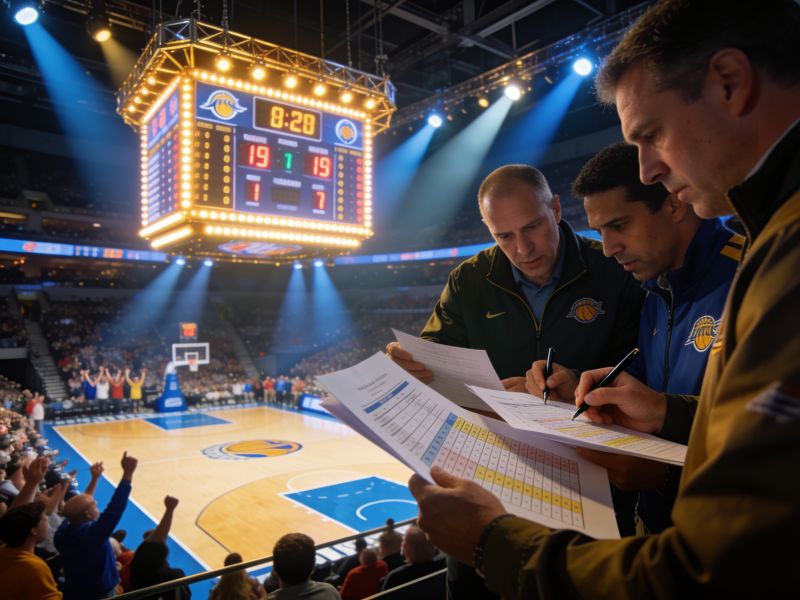
Jamal Murray's availability changes the entire ceiling. Denver's half-court offense is a metronome. Cut。screen, repost, punish the help. Rankings that lean on point differential will flirt with younger teams. Rankings that lean on playoff portability should not. The Nuggets are the clearest example of why these rankings need context: a team can be third in a power poll and first in the category that matters in May. That is not a loophole. It is the difference between a regular-season résumé and a postseason problem. Denver's defense can be picked apart on the perimeter, but its offense forces every opponent to solve a harder puzzle. The Nuggets do not need to win the rankings race. They need to be healthy when the games get slower and every possession feels personal.
The middle of the latest NBA rankings is where the league gets honest. New Orleans has the size and defensive teeth to bother anyone if Zion Williamson stays on the floor;Indiana can score with anyone and stop almost no one;Orlando wins with length and force but needs half-court invention;the Clippers have the talent to flip a series and the health history to lose one. These teams are not ranked by vibes. They are ranked by availability, matchup leverage, and whether their best five can survive a targeted game plan. A ranking that ignores health is just a spreadsheet with an attitude. These rankings should reward teams that can be trusted in late-game possessions, not teams that look great in a highlight package. That sounds obvious until you see a 45-win team with a clean bill of health ranked below a contender missing two starters. The gap is not always talent. Sometimes it is simply who can play. That is why a healthy sixth man can move a team three spots in a single week.Minnesota's defense, New York's toughness。and the Lakers' variance all sit in the same conversation for a reason. The latest NBA rankings are not a verdict on June. They are a running audit of habits. Boston's spacing, Oklahoma City's hands, Denver's patience, and the middle class's health questions tell you more than the raw order. Watch the next two weeks for the teams that tighten their rotations. A club can be 12th and more dangerous than the 8th seed if its best lineup finally gets healthy. That is the useful way to read the latest NBA rankings: follow the direction of travel, not the number beside the logo. The standings will move. The habits are the part that lasts. A ranking is a flashlight, not a finish line. The rankings will look smarter in April than they do now, but only for the teams that treated January and February as a laboratory instead of a publicity contest.